

Wireless Handheld Microphone vs Lavalier Microphone
Which one should you use for your wedding?
Couples often ask whether they should use a wireless handheld microphone or a lavalier microphone for their wedding ceremony. It’s a great question, and as a Utah wedding DJ with over a decade of experience, I’m happy to answer it.
I use both handheld and lavalier mics for weddings, conferences, corporate events, presentations, and live productions. Neither option is automatically better, because the right microphone depends on who is speaking, how much they want to move, and the type of control we need over sound. Here’s a bit of information about both to help you decided which one to use at your event:
What is a Wireless Handheld Microphone?
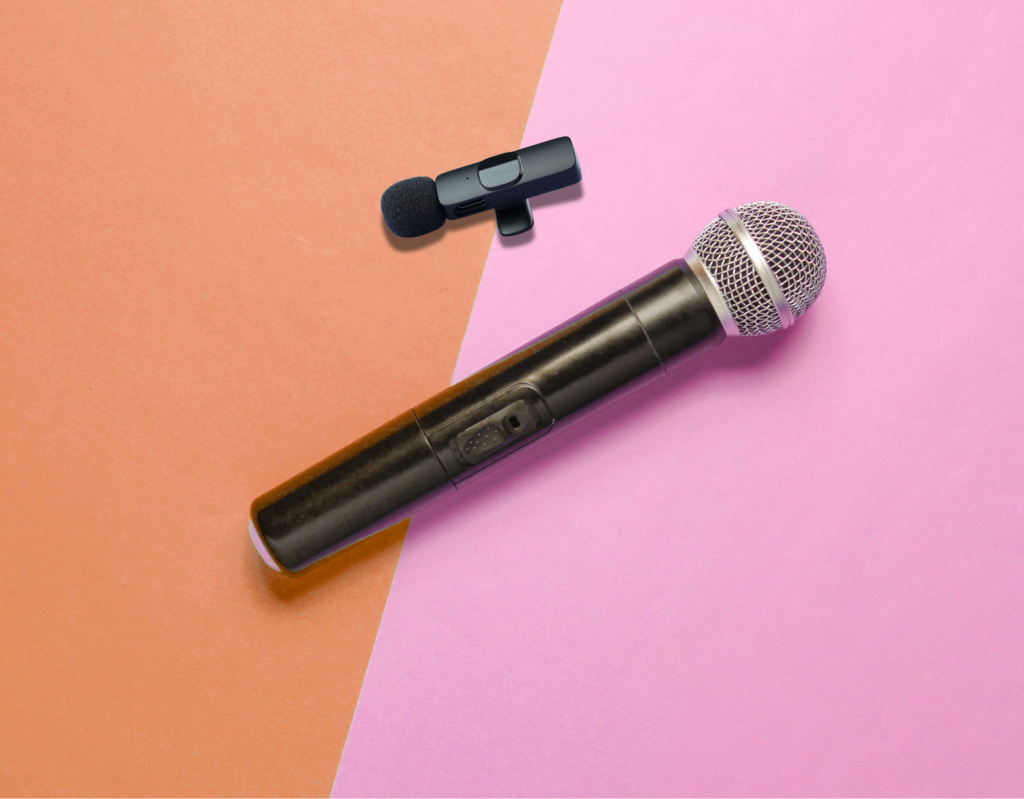
A wireless handheld microphone is exactly what it sounds like. The person holds the microphone while talking, but there is no cable connecting it to the sound system.
Handheld microphones are usually my first choice for toasts, announcements, and speeches. They are easy to pass from one person to another, and most guests immediately understand how to use one. Also, the speaker can move the microphone closer or farther from their mouth, which gives them some control over volume and tone.
However, there is a downside to handheld mics, as some people do not always hold microphones correctly. Some hold them near their stomach, point them toward a speaker, or wave them around while talking. For this reason, I often set up a mic stand to guide guests who are offering speeches and toasts.
What is a Lavalier Microphone?
A lavalier microphone is a small microphone clipped to a person’s shirt, jacket, tie, or dress. It connects to a bodypack transmitter, usually attached to a belt, waistband, or hidden inside clothing.
The biggest advantage to this type of mic is hands-free movement. They are perfect for officiants, presenters, instructors, panelists, and anyone who needs to use both hands while speaking.
At a wedding ceremony, I sometimes prefer to use a lavalier for the officiant. So the officiant can focus on the couple instead of remembering to hold a microphone. Depending on the setup, a properly placed lavalier can even pick up some of the couple’s vows, although I never assume that without testing mic placement.
Wireless Handheld vs Lavalier Sound Quality
So what about sound quality? Usually, a handheld microphone gives us more quality control because it is normally positioned closer to the speaker’s mouth. This helps us capture more voice and less ambient noise, plus helps prevent feedback.
Verses, a lavalier sits farther from the mouth and may pick up clothing noise, wind, room reflections, or sound from nearby speakers, which is why placement matters a lot. A mic clipped too low can sound thin or distant, while one rubbing against a jacket, necklace, hair, or scarf can create distracting noise.
That does not mean lavaliers inherently sound bad! We just need to place and test these mics with attention to detail and precision before using them. A professional one placed correctly and managed by an experienced technician sounds excellent.
Rooms and Situations in which I don’t use a Lavalier:
- Ballrooms that are echoey
- Gyms
- Windy Outdoor areas
- Near waterfalls or freeways
- Carnivals
- Rooms with lots of windows, wood, or brick
- Small or confined spaces
A lavalier will pick up sound from everywhere in a room so if there are things that reflect sound or generate sound, it is not always the best option.
Outdoor Events Require Extra Planning
A quick note: outdoor events sometimes add another complication: wind. Small lavalier microphones can be sensitive to wind because they are attached to clothing and often exposed. But we have you covered, because proper windscreens, careful placement, and sound checks can fix this.
Sometimes wireless reliability also hits a snag. Professional systems need suitable frequencies, charged batteries, clear signal paths, and receivers positioned correctly. I fix this by sound checking and identifying potential problems before guests arrive rather than troubleshooting minutes before the vows.
Which Microphone Is Better for Weddings?
In the end, here’s what I would recommend: For most wedding receptions, I recommend wireless handheld microphones. For ceremonies, lavaliers are often good options for officiants because they keep both hands free for notes, rings, and ceremony materials. A handheld may still be better for readers or singers who only speak for a short portion.
My typical approach may include:
- A lavalier microphone for the officiant.
- A handheld microphone available as a backup and for vows.
- Wireless handheld microphones for reception toasts.
- Separate microphone planning for live musicians or performers.
And of course, the exact setup is always customized to the venue, weather, number of speakers, ceremony layout, and how the couple wants the event to feel.
The Best Microphone Is the Right One for the Job
Basically, wireless handheld and lavalier microphones are both useful tools! A handheld usually offers better control for speeches, while a lavalier gives the speaker freedom to move and use both hands.
The real difference comes with your DJ’s planning and skill, because most guests will never notice which microphone we use, but they will notice whether they can clearly hear vows, speeches, or if there is ever that horrible feedback sound. And if I ever have or had the opportunity to work with you, you know it is always my goal to make your event run smooth, no matter which mic you use.